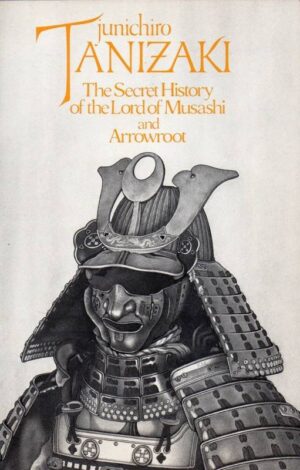
The Secret History of the Lord of Musashi offers an interesting and different way to approach a story. The story follows a researcher as he writes about the secret family history he discovered. The narrative combines a story about the researcher’s efforts to decipher the history and write a contemporary account of it with quotes from the history itself. The histories are invented by the author Jun’ichiro Tanizaki. Tanizaki is considered to be one of the prominent authors in modern Japanese literature. He also wrote Devils in Daylight, Fumiko’s Feet, Naomi, The Makioka Sisters, and several other words that have been translated to English. In Secret History, he weaves several layers. First, you have the invented histories, which have an authentic-feel to them, the narrator’s voice as he researches the histories and accounts them to us, and Tanizaki’s narration of the narrator.
Strangely, it works. The layers of narration remain clear. Sometimes the narrator accounts of the history as if it is a fictional story and then interjects a quotation from another source to support the veracity of the narration. Soon after the narration sections, complete with dialogue and other fictional elements, the narrator lapses into a more academic tone, such as this:
According to the history books, Yakushiji Danjo Masataka fell ill during the assault on Ojika Castle in the Tenth Month of 1549, raised the siege and withdrew to Kyoto, where he died ten days later at his mansion on Aburakoji. It is clear from “Confessions of Doami” and “The Dream of a Night” that this account is untrue, but at the time only a few members of the attacking force–and, in the castle, only Hoshimaru himself–knew the real story.
Sections like these gives the novella a feel of authenticity, which creates an interesting illusion: are you reading a history book or a work of fiction?
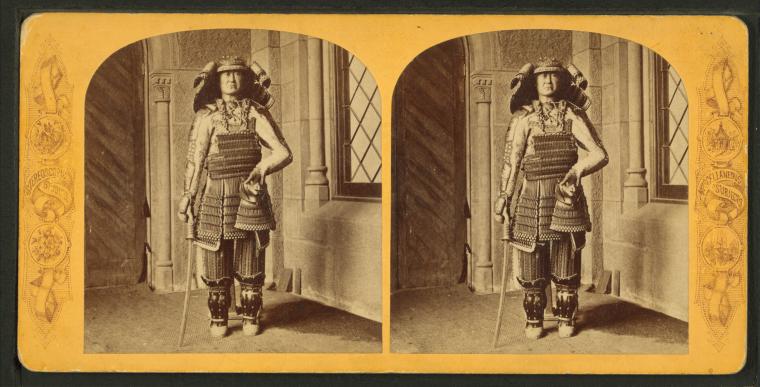
Many strange events happen throughout the work. Namely, one of the main characters, Terukatsu, develops a strange fetish for women grooming the severed heads of defeated warriors, particularly those who had their noses removed. Samurai used to collect noses as proof of killing a warrior in a duel when they couldn’t take the warrior’s head as a trophy. Later, the warriors would match nose to face as proof of the victory and the honor the victor may receive. When Terukatsu begins an affair with the beautiful Lady Kikyo, they both conspire together against her husband, as the researcher accounts:
In other words, Terukatsu’s morbid lust and Lady Kikyo’s desire for revenge coincidentally sought satisfaction in the same object: to render Norishige noseless without killing him.
Terukatsu wants to see Lady Kikyo and her noseless husband together in a strange voyeuristic moment:
[Terukatsu] longed to steal a look at the lady, preferably when she was alone with the harelip daimyo in their bedchamber. The lord of the pitiful face would utter sweet nothings in that peculiar voice, and his beloved wife Lady Kikyo would suppress a laugh, hide her sly malevolence, and smile coquettishly. This scene, doubtless repeated every night deep in the palace, was enacted to Terukatsu’s daydreams whenever he came before Norishige.
This fetish is developed earlier in the historical account by the narrator. Later on, Terukatsu’s fetish drives him to abuse Doami, his court fool. The abuse takes place in front of Terukatsu’s wife, Lady Oetsu, who is shamed by her involvement as an audience. The entire fetish and story Terukatsu’s affair with Lady Kikyo are part of the secret history that the researcher uses to reveal the true character of Terukatsu as opposed to the official historical record. Of course, the official historical record is also an invention of Tanizaki.
The level of detail Tanizaki stuffs into the novella makes you believe the secret history and the official history are real. The way Tanizaki writes the quotations and the researcher’s account suggests depth behind the quotations and narratives. The entire work becomes a satire of samurai practices–Terukatsu’s noseless head fetish–and that of historians as Tanizaki outlines his researcher’s debates about the fictional historical documents Tanizaki created. The effect these combined satires creates points to how history is a reconstruction. We rarely know the character of historical figures without some sort of agenda coloring it. Tanizaki’s focus on Terukatsu’s head fetish (I have to add is directed toward the women who groomed the heads and not the men, which makes the fetish even more specific) suggests how history seeks to besmirch character or exonerate it. Human details are often glossed over if the details are mentioned at all.
The Secret History of the Lord of Musashi is a unique novella. I can’t recommend it for everyone. To get the most out of the story, you need to understand samurai culture and academic culture to see the more subtle satire. However, you don’t need to know all of this to read the main story. As a writer, I felt amazed at how Tanizaki layered the story. It didn’t always work. Some areas felt confusing or disjointed, and the shift from narrative to researcher and to Tanizaki’s voice didn’t always flow well. That might also have been a translation problem. I imagine translating the work would’ve been challenging. However, the work remained interesting. If you are into modern Japanese literature, this is a novella to read.

Leave a Reply