I had hunted for a cheap English copy of Musui’s Story for several years. Finally, I stumbled across a copy buried in a used book store for $5. Katsu Kokichi wrote his autobiography toward the end of the Tokugawa period. Musui, to use his retirement name, wasn’t a scholar, administrator, or a samurai of any significant rank. He writes about his many misadventures, foolish behavior, and money problems. He loved the pleasure districts, engaged in street fights, lied, stole, and otherwise described himself as a swashbuckling hero and rogue. His brothers, however, were respectable and held status.
Kokichi writes about the thieves, beggars, priests, merchants, and other lower-social class people he spent his time with. It’s rare to find such accounts in history. Kokichi often writes about his money problems; he enjoyed spending on other people, throwing parties and giving money away to those less fortunate to him. As a penniless samurai, he still had access to credit and work that lower-social classes didn’t, despite his financial foolery.
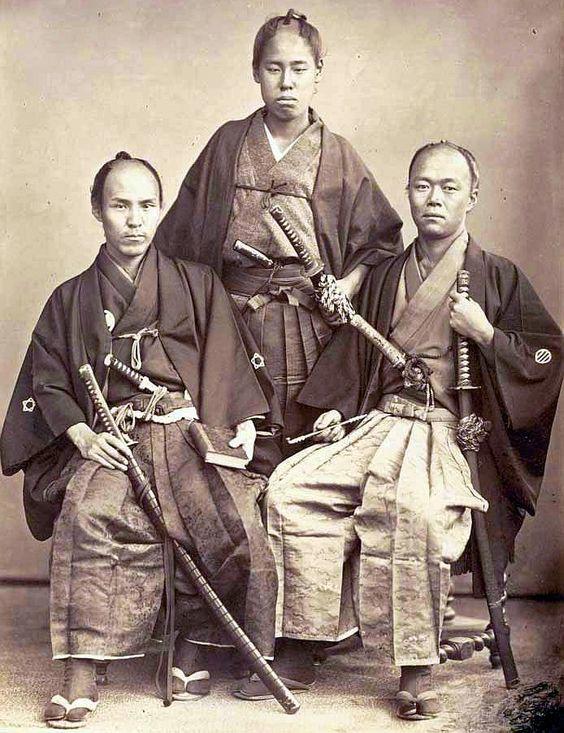
One of his favorite ploys to force villagers to pay taxes or otherwise get his way was to threaten to commit seppuku. He started this ploy young and used it to great effect when he took a low-level tax assessment job (which he makes out to be a higher class job than it was):
I took off my kimono and put it on a large tray. Handing Kisaburo my long sword, I said, “Use this to cut off my head.” I ordered one of my men to bring the container in which to place my decapitated head–I’d brought it from Edo–and as I unsheathed my dagger and wound its handle with a strip of cloth, I reminded everyone to carry out my instructions. I looked around the room. “You may raise your heads now. Behold how Katsu Kokichi commits harakiri!” I held up the dagger. “Stop. Please stop!” Crying out, the villagers crawled toward me. Kisaburo, are you ready?” He remained bowed to the floor.” “Must I ask someone else?” Kisaburo slowly got up and went behind me. Several villagers clung to him and wailed. “Please wait–we have something to say.”
As a result of this farce, the villagers paid 550 ryo of the 600 ryo Kokichi was sent to collect that same day. As you can see from this episode late in his life, Kokichi remained a rogue, but this didn’t compare to his younger antics.
Kokichi ran away from home, and his responsibilities, several times. He wandered as a ronin, teaching swordsmanship and becoming a sword merchant to keep himself fed. He also got into duels, brawls of various sorts, and even turned to begging. After he returned home for a time and ran away again, his family built a cage. Yes, an actual cage, and locked him in it since he couldn’t behave himself. Now you’d think this may straighten him out, and it did, for a time. But he again began spending his days in the pleasure districts, living with the prostitutes for all purposes, and otherwise avoiding honest work. His family again stuffed him into a cage. Kokichi accounts:
I went out to the garden. The cage was sturdily built with double enclosures. I said to Shintaro and my sister-in-law, “I appreciate my brother’s concern. This time, though, may I suggest that you get some candles to light for me, because I’ve already made up my mind to stay in the cage for good and not come out even if I’m forgiven. You see, around where I live in Honjo, I’m well known and regarded as a hero of sorts. The fact is that people who don’t know me are looked down upon. But after a humiliation like this, I could never show my face to my fellow men. I will fast and die as soon as possible. Yes–I had a feeling that something like this was going to happen, and before coming I told my wife what to do just in case. So, Shintaro, here are my swords. I will do as you please.”
You can see his craftiness at work along with his sense of self-importance. Remember, he wasn’t an important or high-ranked samurai. Aside from these antics, he was well-liked by many. He seemed to have charisma and was generous to a fault despite being a shyster. So, not all of his claims were exaggerated.
Kokichi’s autobiography is an interesting read. He wrote it late in life, so he claims, as a lesson of how not to live: “When I think of my past, my hair stands on end.” He accounts the blessings he had enjoyed while looking back on his misdeeds:
I have no learning to speak of, having taught myself to write only in my twenties–and barely enough to cover my own needs at that. My friends were all bad and none good. Unable to distinguish right from wrong, I took my excesses as the behavior of heroes and brave men. In everything I was misguided, and I will never know how much anguish I caused my relatives, parents, wife, and children. Even more reprehensible, I behaved most disloyally to my lord and master the shogun and with uttermost defiance to my superiors. Thus did I finally bring myself to this low estate.
I am most fortunate in having a filial and obedient son. My daughters, too, are very devoted. My wife has never gone against my wishes. I am altogether satisfied to have lived until now without any serious mishap. At forty-two I have understood for the first time what it means to follow in the path of righteousness, to serve one’s lord and one’s father, to live with one’s kinsmen in harmony, and to have compassion and love for one’s wife, children, and servants.
My past conduct truly fills me with horror.
He ends the book with:
My past conduct truly fills me with horror. Let my children, their children, and their children’s children read this record carefully and savor its meaning.
Should You Read Musui’s Story?
Well, it depends. Kokichi’s autobiography is a biased account of his life. It’s an easy read if you have a background in the Tokugawa period. Kokichi doesn’t explain customs or details. He had no reason to since he was writing to readers who lived in the same culture and time period. You can follow his antics without the background information, but some of the reactions and details wouldn’t make sense. If you like historical biographies and want to read about an interesting, if foolish, personality, give this a read. You’ll want to read the book with skepticism since Kokichi is the hero of his own story despite his recognition of his irresponsibility. However, the book offers an interesting glimpse at the lives of prostitutes, thieves, villagers, and other lower-class groups subjected to self-important samurai like Kokichi. I found Kokichi a rogue who sometimes genuinely cared for those without the privileges he enjoyed. His mismanagement of his finances provide a good lesson on what not to do. Then again, he did state that he wanted his book to be a lesson of what not to do.
If you are just a casual anime watcher or manga reader, there’s nothing to gain from reading Musui’s Story. It’s entertaining, but it’s not a novel. If you don’t have an interest in history, this book won’t interest you either. The book may even mislead you. Kokichi’s account teems with bias based on his experiences. He doesn’t try to provide opposite perspectives and, despite calling himself a fool throughout the book, still paints himself as a hero. Despite this (and because of this self-portrayal), I found Musui’s Story an entertaining and interesting read.