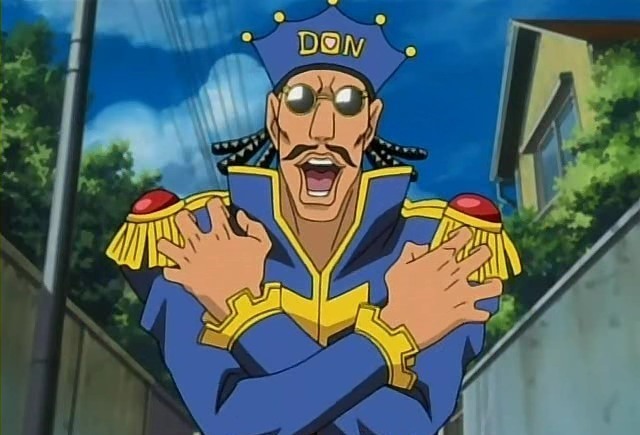
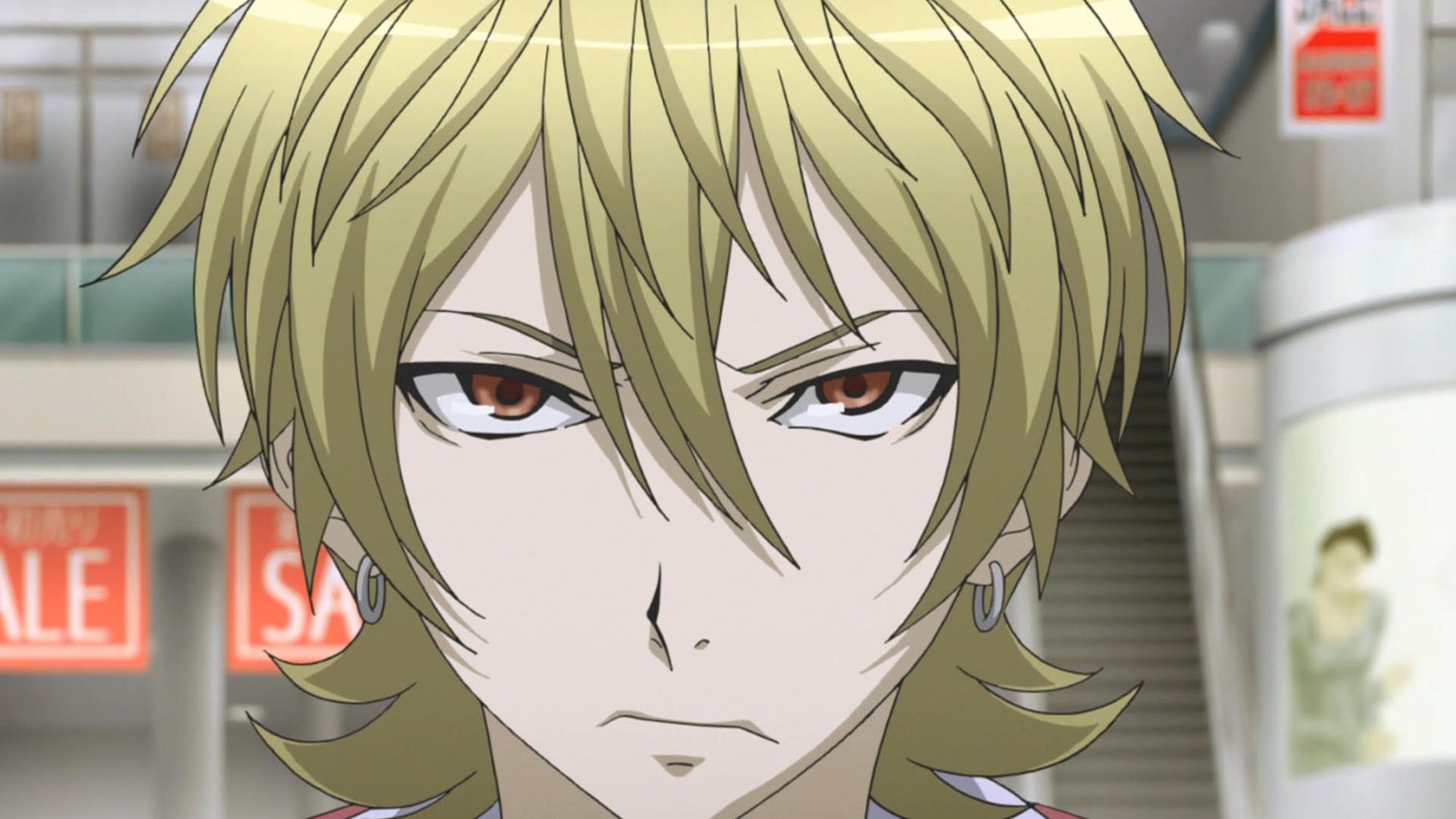
Anachronisms appear throughout anime. They take many different forms, sometimes impacting the story and other times erring in details that don’t matter. Merriam-Webster defines anachronism as “a chronological misplacing of persons, events, objects, or customs in regard to each other.” Anachronisms can pull you out of a story by jarring the fragile illusion the story weaves. With fantasy stories, anachronisms can become a part of the world, depending on how they’re handled. For isekai, chronological misplacement becomes a part of the story. Most of the time, a modern person is transferred to a past world. The past world is often modeled after a Japanese Role Playing Game, complete with leveling systems and heads-up-displays (HUDS) that display statuses and other video game shorthands. In such stories, the historically accurate elements become the anachronisms, strangely enough.
Many anachronisms are so common in anime that they become a trope of themselves. They appear across all historical periods depicted in anime and across most fantasy worlds. Most anachronisms involve our familiar modern fashion, words, accessories, and food slipping into history. As a writer, I try to guard against the modern slipping too much into setting and characters, but because I use modern language and write for a modern audience, my stories are anachronisms despite my historical research and effort. Many anime stories, however, don’t try to curb modernisms. Instead, these stories embrace modernisms, following anime templates like the beach or swimsuit episode down to the modern bikini. Chronological displacement can hurt stories by not taking the setting and world-building seriously if the stories are supposed to be serious. It depends on the story.
French Maid Uniforms
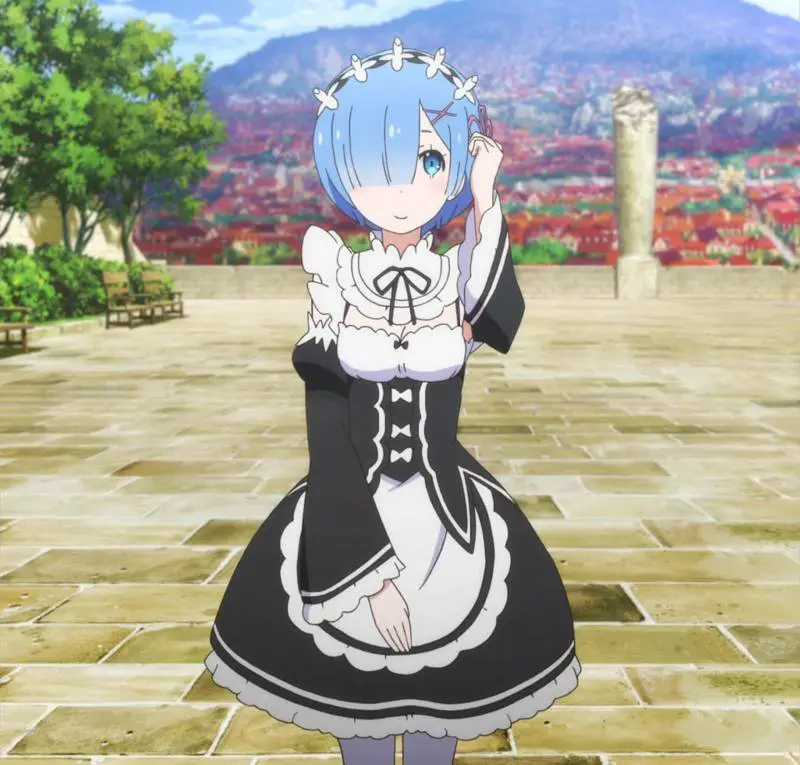
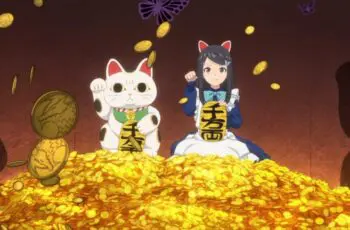
Perhaps the most common anachronism found in anime is the French Maid uniform. The uniform roughly dates to the 1800s, with a simple, modest and long dress covered with a white apron. The lace, thigh-high stockings, high-heels, and short skirts come from the modern-erotic take of the Victorian outfit. What we see in anime isn’t historical; it’s Halloween. Because of this, even when the outfit appears in a Victorian-era story, it’s still chronologically out of place. The anime version of the French Maid traces, as far as I can tell, to burlesque shows. Of course, the outfit appears in maid cafes which is what anime stories reference. The uniforms play into the fantasies of the audience. The uniform has several layers–referencing wealth, history, modern consumer culture, and an inverse of Victorian sexual strictness. For most people, however, it’s just eye candy and an expected beat in a typical comedy or slice-of-life template.
Business Suits
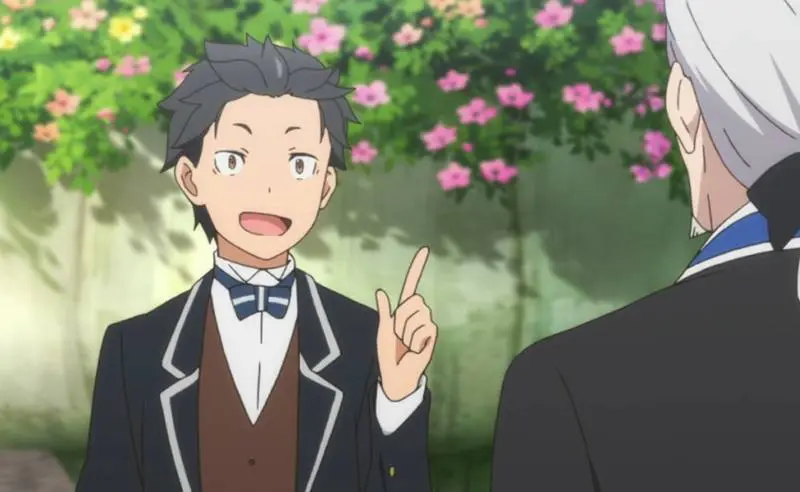
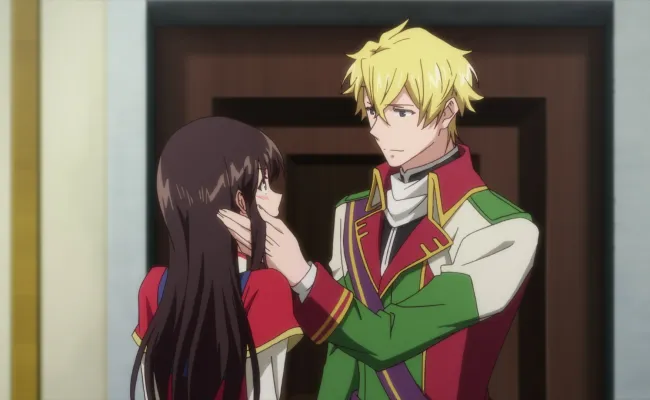
Like with French Maid uniforms, many anime men wear business suits in historically disconnected periods, particularly if they work as a butler. With isekai, this makes sense since the character is suddenly transported from our world to another. What the character wears at the time would influence their new world. Usually, the protagonist is shown as a hero, and, as such, others in that world would want to emulate his dress and mannerisms. This would explain how ties and suits could become more common in such a story. However, in historical dramas, particularly in shojo period romances, Western-style ties and business suits are pure anachronisms. They act as shorthand for social ranking or, as I mentioned, most often pointing to their job as a butler. But this shorthand is lazy. Every historical period had its own signals of social importance which would become apparent to the audience in short order. Butlers, like maids, also had their own historical uniforms. While this detail isn’t important, I find ties and other suit-related clothing niggling. They break the setting and the world a bit too much for my taste.
Modern Accessories
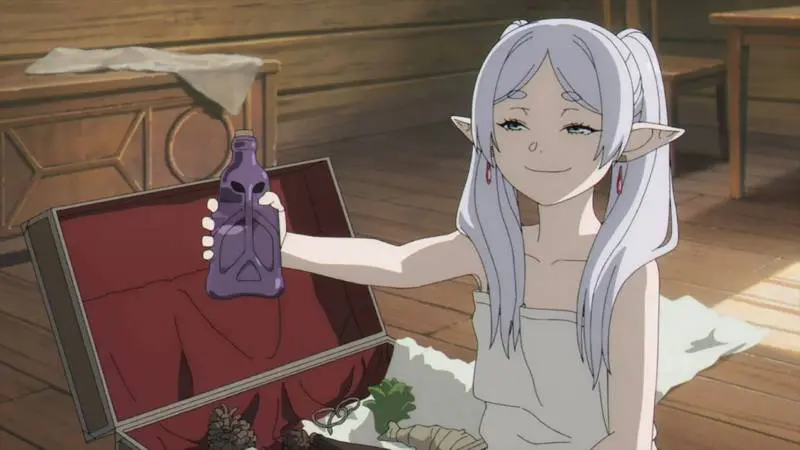 Related to suits are inappropriate accessories like suitcases, pens, pencils, large glass panels. I’m getting nitpicky in this section. Most of the time, these little details don’t matter for the story nor do they detract from the setting as much as salaryman suits, maid uniforms, and the other items on this list. Frieren, for example, has a singular jarring anachronism in an otherwise grounded story–her suitcase. The suitcase’s design is far too modern in design. A wooden box or a bag would’ve been more accurate for the world as it is portrayed. I’ve pondered if the modern suitcase is an intentional contrast. Frieren is often stuck in the past; her modern suitcase holds trinkets from that past. In other words, the future holds the past but is carried by the present. Perhaps I’m thinking too deep in this, but anachronisms can be used to point toward deeper ideas and themes, especially when the story otherwise avoids such anachronisms. Not all modern accessories hurt the story, but if they come from sloppiness, they can. They break the weave. Setting is a character too, and chronologically wrong items are akin to a character acting against their established nature without a good reason. Modern accessories creep in with earrings, glasses, and many other details that we take for granted today because they are a part of our world, but they would’ve been rare and limited to only the wealthy in other time periods.
Schools and School Uniforms
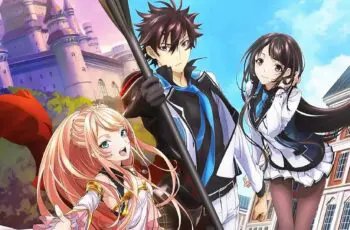
Schools and the concept of school uniforms can be anachronisms depending on how the world is established. Nobility hired teachers and tutors rather than sending their children to an academy. Academies existed, tracing at least back to the Greeks here in the West. But these academies weren’t schools as we know them, complete with dormitories and classrooms. Rather, academies coalesced around certain teachers. Socrates had his own academy–the students that followed and learned from him. They would meet outside in the city square. In medieval Europe, nunneries and monasteries acted as schools with students sometimes living on site as lay-monks or lay-nuns. Most of the time, teachers taught in the home of the student. While in a fantasy world there’s nothing wrong with centralized schools, the idea has folded so deep into anime’s tropes that other, more historically accurate, approaches rarely appear. Mushoku Tensei: Jobless Reincarnation, at least at first, features this historically correct at-home tutoring system, but it’s school system is mentioned and pointed toward early in the story, so it works.
Because this is anime, most schools include uniforms. Many stories have the uniform designs grounded in their world–although Japanese ties and sailor ribbons still appear. Again, this can be fine if it works for the story, but the problem appears when these schools and their uniforms are forced into the world building. Schools force disparate personalities together in interesting ways, but it can be an artifice.
Swimsuits
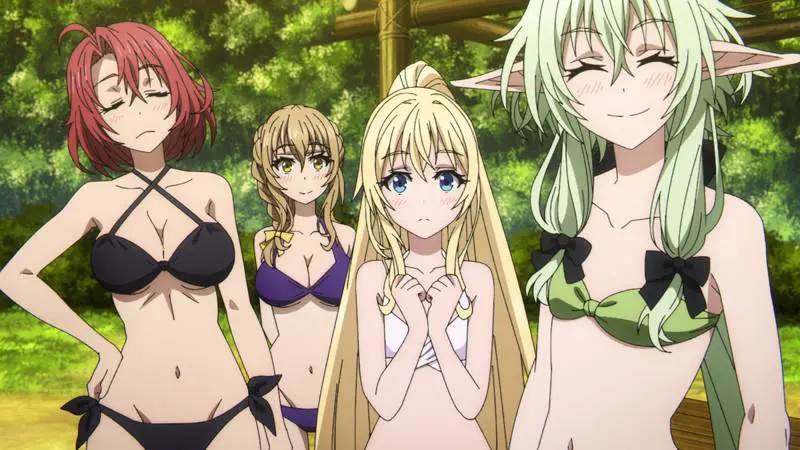
There seems to be a clause in whatever contracts mangaka sign with publishers: swimsuits are required at some point. Depending on the culture and time period, historically accurate swim suits would be no clothes at all!Japan’s history is well-known for having coed hot springs, but such bathing practices appear throughout the world’s cultures. Loincloths would be accurate alongside no swimsuit at all. Of course, this wouldn’t work for most stories. But most of the time, we see modern bikinis and one-pieces during these scenes. Both are products of the last century, along with the characters’ reaction to those swimsuits. In cultures where coed nude bathing was the norm, such swimsuits would be considered odd and even modest–making the usual embarrassed reactions anachronisms too. Nudity wasn’t a big deal. In other, more modest periods, swimsuits were little different from normal clothes because skin was taboo for both men and women. In such cases the anime embarrassment beat would fit. It’s rare to see a fantasy or historical anime that avoids the swimsuit trap. Bras, just like bikinis, stand as anachronisms too. Women either used chest wraps or went without support for most of human history. Boxers, swim trunks, and similar underwear for guys would also be anachronistic.
Food
Japanese food often features in stories. In some isekai, characters crave rice and other food from home because their world doesn’t have such food. When the character can enjoy the food, or some approximation, from home, it’s an important beat in the character’s story arc. It ups their morale and fills a need they took for granted. This is good for story telling. However, in other stories, the world inexplicably has ramen, udon, and other Japanese foods (sometimes even hamburgers) in an otherwise medieval European setting. Sometimes the story justifies this anachronism, which can add dimension to the world. Other stories just zero-in on the character’s pleasure and the excuse for some anime-food porn. Food reflects the culture and the world, fleshing out setting as a character. While compared to modern flavoring we’d consider the past’s food bland, food wasn’t as bland as often shown in anime. This too is a chronological displacement. Herbs, spices, salt, pickling, sauces, and other techniques were common throughout the ancient world. Pepper was one of the most valuable of spices, which often kept it out of the hands of the common people, but they still had access to herbs like rosemary, wasabi, basil, mint, and so on depending on time and place. Honey and other sources for sweetness would’ve been accessible too.
Language
This one is impossible to avoid. You can’t write a story for modern audiences without using modern language. If you tried to write a character in historically correct lingo, few of your audience would understand what’s said. However, writers ought to avoid modern slang even if it correlates with slang from the time period. It’s better to pepper that time-period appropriate slang–with some sort of context to make the meaning clear–than to resort to modern slang. After all, modern slang shifts fast with words rising and falling out of favor again within months. Of all the anachronisms we see, I’m most sympathetic to this one. It’s unavoidable because of the nature of language. Sometimes a character will say something that breaks the spell, but I can forgive that since the meaning and emotions behind slang doesn’t change even though the words have. Jesus, for example, spoke of the word Raca which means nothing to us now. But if you substitute a word like delulu the meaning and emotion remains the same, even if the word is an anachronism.
The Custom of Breaking Custom
Anachronisms break with the rules and customs of the story unless that is the rule of the story. Comedies can play with chronological displacement to good effect. Anachronisms can take us out of a story if they cut against that story and setting. They can do damage to setting as a character. At the same time, anime does this so often that not having an anachronism might be an anachronism, working against the current customs of anime and manga as a method of storytelling. In the end, chronological displacement is an error if it troubles you and pulls you from the story. It may not be an error for someone else. Stories are subjective; once released into the world, the consumer has the final say on how they relate to the story and what that story means to them. I just tend to be a bit persnickety about historical accuracy when the story is trying to be serious.