

Osamu Tezuka is considered by consensus as the “father of manga” and the pioneer of the medium. However, he didn’t invent manga or its offshoot anime. Manga as a medium dates back into history, beyond the Edo period, with comedic scrolls of various sorts, including “fart scrolls“. Tezuka took all of these elements along with American comic influences and pulled them together to create manga. In a similar way, Rumiko Takahashi could be considered the mother of manga and anime. While many other mangaka worked before her, just as manga existed around and before Tezuka, she takes these threads and pulls them together. Her influence on manga, anime, and their audience reverbates across the sphere. Takahashi’s work ranges from slapstick panel comicsm to sitcom style stories, and to more serious fantasy adventures. Early in her career, you can see Tezuka’s influence on her work: one of the many threads she pulled together. Japanese folklore weaves throughout her work, lending to its nonsensical humor and odd juxtapositions. Takashi often contrasts folklore with modern culture to parody both. Her parodies and exaggerated comedic commentary on modern culture created tropes and character archetypes manga and anime fans expect.
Other artists played with these character types, situations, and what would become plot patterns. However, Takahashi, like Tezuka, popularized these and become a spring for stories and artists after her. Manga, like all literature, influences itself and creates a web of references. Takahashi can be linked with the rise of moe, the tsundere character archetype, and the rise of waifu culture. Again, these elements existed before her work, and her work existed before these terms were coined. Namely, we can trace moe, tsundere, and waifu culture to one character Takahashi developed: Lum.
Lum appears in Takahashi’s slapstick panel comedy Urusei Yatsura, serialized between 1978-1987. Lum crashes into the life of the dimwitted (by the admission of even his parents), horny teenager Ataru Moroboshi as part of her civilization’s invasion of Earth. She’s an alien oni, a demon from Japanese folklore. During a fated game of tag where the fate of Earth rests on Ataru, Ataru accidentally proposes to her. From that moment onward, Lum considers them married, much to the girl-chasing Ataru’s dismay. Fusanosuke (2021) writes:
What was very new in Urusei Yatsura was the chance to indulge in the pleasure that a totally trashy, morally irresponsible boy could be doted on by a super-attractive girl—as opposed to the usual focus of mainstream (ōdō) shōnen manga on the battle between good and evil.
Lum plays the role of the mysterious girl who suddenly crashes into a boy’s life, forever changing his fate. At first, she hates him, but over time, grows to love him. The process of turning from cold hater to warm lover was the original definition of tsundere. Lum often shows her affection, unlike a modern tsundere who keeps a tough outside personality while holding sincere care and affection inside (Brakke, 2015). However, Lum often waffles from affectionate to punishing as Ataru keeps with his womanizing. This comedic shifting becomes the base for how tsundere characters behave in later stories. Tsundere protect their soft, caring interior with a stern, angry, and often violent exterior. They are hedgehogs. However, Lum, as the progenitor of this type, doesn’t guard her soft interior. She displays her affection for her “darling” Ataru in full view. But her violent outbursts toward him and occasional cold-shoulder would later develop into tsundere and the kuudere character types.
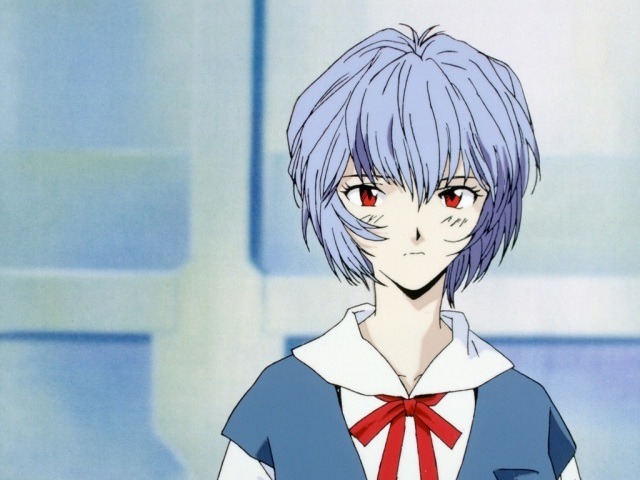
Lum’s character would split into these two character types most famously with Neon Evangelion’s Rei and Asuka. Rei is a kuudere, a cold and distant character, which traces to how Lum would sometimes act toward Ataru. Asuka becomes the template for tsundere. She takes Lum’s anger and violent outbursts, which are driven by her feelings for Ataru, and uses them to protect her soft interior. Rei and Asuka’s characters drop the comedy. In doing so, they create two different rivers that look quite different from the source. Stories develop in this way. The Hero’s Journey, as Joseph Campbell traced in his essays, has morphed over the centuries. Heroes today are far different from what we see in ancient literature, but their ancestry can still be traced. The modern action hero differs from Gilgamesh. So too modern tsundere and kuudere can be traced through Asuka and Rei and back to Lum, who, in turn, gathered these various traits from other characters and stories all the way back through Tezuka and Japanese folklore. Various characters, in turn, descend from Rei and from Asuka. Lum could be considered both the first tsundere (Galbraith, 2009b) and the first kuudere, although her kuudere traits appear less often than her tsundere traits.
Lum begins a trend, because of the nature of panel comics, to separate the traits of a character from its story so that those traits stand alone in their resonance with the audience. The trend gains momentum with Rei:
Neon Genesis Evangelion (1995-1996), an immensely popular TV anime produced by studio Gainax. Evangelion features a female character named Ayanami Rei, a synthesis of different character types: a clone of the protagonist’s mother housing the soul of an otherworldly being in the body of an adolescent girl. The doll-like and semi-human Ayanami became the single most popular and influential character in the history of otaku anime; fans still isolate parts of the character to amplify and rearticulate in fan-produced works to inspire moe. After the success of Ayanami, the focus shifted to kyara with moe traits in lieu of story (Galbraith, 2009a).

Moe traces back to Lum’s design through Rei. Before Rei, Lum was a “super-sex symbol” in Japan (Galbraith, 2009b). Her design combined traditional animal-skin clothing of Japanese oni with sexy-bikini clothing similar to other 1960-1970s American films like Barberella and One Million Years B.C. Moe deals more with the viewer’s response to the character than with the character’s design itself. As one man told Galbraith (2009a): “‘Moe is a wish for compassionate human interaction. Moe is a reaction to characters that are more sincere and pure than human beings are today.'” Galbraith explains:
Moe is by now common parlance in Japan and among its researchers, but it remains stubbornly oblique. Often the definition is presumed in advance and never questioned openly, as if everyone implicitly understands the meaning. This tends to make definitions appear self-evident, while reinforcing received stereotypes. It is for this reason that moe is consistently misunderstood as first and foremost images of young girls instead of a response to virtual potentials, which can exist in a range of different images.
If Lum stands as one of the first moe characters, Takahashi can be considered the mother of the modern moe trend. Moe exists outside of narratives and context and developed through the audience’s interactions with the characters. The modern tendency to atomize characters from their literary context, consuming them as memes and still images and short animations, may–at least in a small way–trace to how panel-gag comics work. Panel-gag comics like Urusei Yatsura encourage immediate consumption without the need for continual context. Many gags can stand alone even when they are reoccurring jokes. Sit-coms also fall into this category with today’s social media memes becoming the most extreme version of this trend. I’m not saying Takahashi’s Lum is the reason why the consumption of moe often involves no context. That’s more a result of postmodernization’s trend to simplify context in favor of immediate feeling. However, Lum sits inside this spiderweb as a result and as a feedback source for this type of consumption.
Moe informs waifu culture. A waifu is a fictional character that a person feels a special affinity toward. This affinity separates from how the character fits into her story. Waifu are most often female, husbando are male, but not always. Fans consume waifu apart from their stories. As Galbraith (2011) relates: “Ōtsuka Eiji [a Japanese media critic and professor] argues that as Japan became affluent in the 1970s, the young girl, or shōjo, came to symbolize in the media consumptive pleasure suspended from (re)productive functions.” Lum becomes one of these symbols. Waifu also fall into this category of media consumption. While Lum existed before waifu culture, her status as a symbol links her to this part of otaku culture.
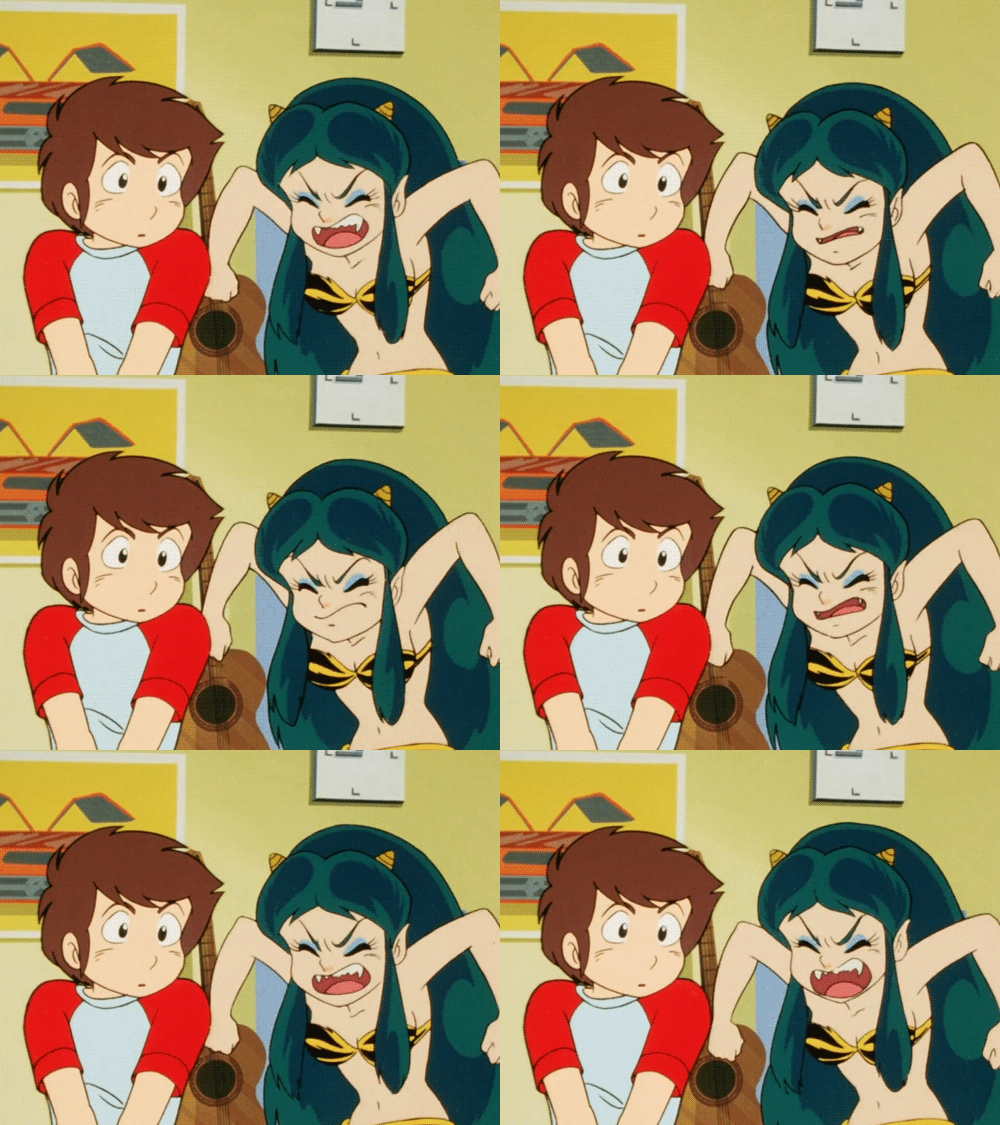
Whether or not Lum sits as the first tsundere, the first instance of moe, or the first waifu stands as a matter of debate. Lum sits in parallel with other characters as a source for these literary trends. The atomization of how we consume and relate to characters and stories sits in a feedback loop. Urusei Yatsura isn’t a cause of the modern disregard for context. It contributed to it and was influenced by this, arguably, century-long momentum. No single idea can be pointed to as the cause of atomization. Likewise, I may have argued in this article that Lum is a source for moe, tsundere, and waifu culture, her character isn’t the source. If we return to my river metaphor, rivers may flow from mountains, but they are also added to by the water-table, rain, and snow. There’s no single source or cause for a river. Tezuka isn’t the source for manga, but his work is a point along the course. So too Takashi’s work sits as a point along the course. Each in turn influenced those downstream. Lum’s character and popularity split into Rei and Asuka, but other characters came between Lum and the Evangeleon girls. Any one of these other characters could be seen as splitting into the kuudere (Rei) and tsundere (Asuka) character types. However, I find Takahashi’s work as the source for this character split compelling for several reasons. First, Takahashi’s work was comedic and parodied modern society. This work then develops into more serious characters which morphed back to comedy and particularly romantic comedy. Second, Takahashi brought a female perspective to boy’s comics. She helped develop the idea that guys too are interested in relationships and not just stories of heroes and villains. While Urusei Yatsura‘s comedy is trashy, it points toward how people are not supposed to act. Third, Takahashi may be a source for some of the problems anime suffers from: objectification, fan-service, formulaic plot structure, tired jokes, and other story-telling problems. These problems developed because of the success Takahashi and parallel writers had. Others emulated them until we started to see the mass-produced qualities many manga and anime suffer from. They dropped the satirical points Takahashi made. For her part, Takahashi emulated Tezuka who emulated Walt Disney and woodblock print artists.
Urusei Yatsura might be the first instance for a harem, a waifu, a tsundere, and for moe, depending on your perspective. It’s rare for any piece of media to be truly the first because they are a point on a continuous line of influence. The Tale of Genji is considered the first novel, but it sits in a literary tradition of poems, pillow books, and other writings. Lum wasn’t the first alien girl. She’s based on a demon from Japanese folklore. But if you consider her a first, you wouldn’t be wrong. The importance of readily recognizable character types results from atomization and the need to immediately relate to a character in order to be interested in that character’s context (Galbraith, 2009a):
Manga scholar Itou Gou argues that since the end of the 1980s characters in anime, manga and videogames became so appealing that fans desired them even without stories (Itou 2005). Ito dubs such character types ‘kyara,’ distinct from characters (kyarakutaa) embedded in narratives.
So Lum can be considered a source for kyara and a result of this long-ongoing trend. We sit further down the river now, to the point where terms like tsundere are common in discussions of manga and anime characters. It doesn’t matter exactly where you place the source. Rather, understanding the momentum of this trend matters. Tsundere began as a process that required a story’s context. It was a character development arc, as Lum showed early in Urusei Yatsura. But as characters became separated from their context through moe, tsundere became a character type–a soft interior with a prickly exterior–instead of a trajectory. This frees writers to play with different character arcs and different emphasis. As for where these character types, moe, and even waifu culture will go, I cannot foresee. We may look back on a current character as a source for some other character archetype in the future. Perhaps Kirito from Sword Art Online or Kagame from Inuyasha could be seen as the source for the isekai character archetype. As with Lum. finding a single point isn’t as important as paying attention and thinking carefully about how we consume and are influenced by stories and characters.
References
Brakke, David (2015) Adoring anime archetypes overused. St. Cloud Times. April 15, 2015.
Fusanosuke, Natsume; Holt, Jon; and Fukuda, Teppei. (2021). Takahashi Rumiko and the Turning Point in the History of Manga and Anime, The Comics Journal.
Galbraith, Patrick (2009a) Moe: Exploring Virtual Potential in Post-Millennial Japan. Electronic Journal of Contemporary Japanese Studies.
Galbraith, Patrick W. (2009b). The Otaku Encyclopedia: An Insider’s Guide to the Subculture of Cool Japan. Kodansha International. p. 46. ISBN 978-4-7700-3101-3.
Galbraith, Patrick (2011) Bishojo Games: ‘Techno-Intimacy’ and the Virtually Human in Japan. Game Studies. 11 (2).
![Lum [Urusei Yatsura]](https://www.japanpowered.com/media/images/Lum-Urusei-Yatsura-350x230.jpg "\"Never Accepting What You Want,\" One of the Themes of Urusei Yatsura")

Fantastic read. I remember the conversations around moe I had in the 2010s and assuming Madoka Magica had something to do with it. You paint a much clearer picture here about the reality of moe in a postmodern, consumerist culture.
Madoka Magica is on my rewatch list. The contrast between the moe designs and the dark story is interesting! Takahashi’s influence on manga and anime’s development is often overlooked. Her sit-com style stories like Urusei Yatsura set many foundational tropes and story patterns. Why do you think Takahashi is largely overlooked in discussions?